DC Network Meet up #4 : The use of AI in the creative sectors – Dec 5, 2023

” Any sufficiently advanced technology is indistinguishable from magic.” Arthur C. Clarke

For the past few years, we’ve been hearing a lot about Artificial Intelligence (AI) and how it’s making big paces with new and exciting applications. But for most, AI still feels like a fuzzy idea that’s hard to wrap our heads around. It’s almost like a magical thing rather than just a new tool born from technology.

This has made AI one of those buzzwords that gets thrown around a lot, and frequently employed in a manner that is indiscriminate, erroneous, or lacking in completeness. The real deal is that AI is growing like crazy. But a lot of times regular folks—like everyday people, customers, and even workers—don’t even realize it’s there, quietly doing its thing.

This upcoming Meetup will showcase some of the practical applications of AI within the DC Network regions. We’ll talk about how entrepreneurs and companies are ingeniously incorporating AI across creative sectors.

The DC Network Meetups are about bringing together professionals from the different DC Network-regions to discuss specific topics related to cross-disciplinary creativity, innovation & entrepreneurship.  The idea is to share good practices/inspiring examples/projects and stimulate knowledge exchange.

Who was this for?

Designers, Creative entrepreneurs, representatives of creative clusters, network and business support organisations, policy makers and anyone with an interest in the subject.

Program

2:00 pmWelcome by Carles Gomara (Districts of Creativity Network)
2:10 pmFour inspiring creative initiatives and business models on AI (15 min. each)
– Nico Roig – CG Artist Metropolitana
– Stephanie Preuss – Director Content Innovation Springer Nature
– Jussi Lahtinen – Urban AI artist
– Antonia Folguera – Curator Sónar +D
3:00 pmQ&A & Networking
3:30 pmEnd of Meetup

About the cases

.

Nico Roig, CG artist – Metropolitana / https://www.metropolitana.net

New challenges in deep fake commercials in the era of AI. As deepfake production techniques fastly evolve through the implementation of AI tools, production houses become more ambitious and ready to take up the challenges thrown by creatives, commonly aware of production/budget limits. Our expertise in traditional post production techniques (such as 3D, compositing, color grading) has turned into a privileged partner to the generative imaging power of AI, and has allowed us to reach farther limits.  We will show some of our productions, great examples of this synergy.

Stephanie Preuss , Director Content Innovation – Springer Nature / https://www.springernature.com

As one of the largest scientific publishers, Springer Nature has been advancing discovery by providing the best possible service to the entire research community for over 180 years. We assist researchers in uncovering new ideas and ensuring that all the research we publish is significant, robust, and withstands objective scrutiny. Our aim is to reach all relevant audiences in the best possible format and ensure that it can be easily discovered, accessed, utilized, reused, and shared. Following a whirlwind of excitement in the field of generative artificial intelligence (AI), it is almost unquestionable that large language models (LLMs) have the potential to transform the way we conduct and communicate science. However, the risks and limitations of relying on these technologies are also becoming apparent.

Exploring technological innovation, including the use of AI, has always been at the core of our work at Springer Nature. We anticipate that in the very near future, humans will utilize LLMs as tools to draft various content types, such as news articles, social media content, or even more traditional formats like Research Highlights. We are actively exploring the opportunities these tools may offer but not at the expense of trust and rigor.The case presented is an example of how Springer Nature is embarking on the journey towards the responsible use of LLMs in scientific publishing by developing tools that enable Springer Nature’s internal editors and authors to harness generative AI for accelerating content creation, such as plain language summaries of research articles or social media posts, in a responsible manner.

Jussi Lahtinen – Urban AI Artist / Urban AI – https://projects.tuni.fi/urbanai/

Urban AI Art is part of the Urban AI project that combines art and science. The main location of the project is the University of Tampere and it is financed by the machine foundation. Visual artist Jussi Lahtinen is responsible for the Urban AI Art artwork and for the technical implementation programmer Henri Sarasvirta, from Moido Games. The Urban AI Art work of art enables development into an art project that is international and communal, as it enables the collaboration of, for example, 100 works of art and artists. It renews the traditional concept of art, how the artworks are displayed. In the past, art has been in galleries and museums, Urban AI Art enables the artwork to be presented on all digital screens globally and to be viewed on a mobile phone.

Antònia Folguera – Curator Sónar +D – https://sonar.es/en

The latest advances in AI have basically entered our eyes, LLMs have revolutionized text and image, and audio and music seem to be trailing behind.

The truth is that music has been related to AI since the beginning. In this session we will retrace the path that AI and music have taken from 1957 until now and we will see some experiments that we have developed at the Sónar festival.


This online DC Network Meetup will be hosted by DC Network-region Catalonia and is organised by FlandersDC

More info//
Carles Gomara
Host DC Network Meetup#4
cgomara@gencat.cat
http://www.accio.gencat.cat

Elke Timmerman
Coordinator Districts of Creativity Network
info@districtsofcreativity.org
http://www.districtsofcreativity.org

DC Network Meetup: Technology enhancing sustainability in fashion

Technology enhancing sustainability in fashion

Wearable technology, high tech fabrics, AR, VR, data analytics, blockchain, nanotechnology, internet of things, robotics, 3D rendering,… can all have an impact and added value on how we create, produce, experience and consume fashion today and tomorrow. Concrete examples such as smart textiles for second life purposes, RFID tags for traceability or AR/VR sizing for better fit in e-commerce showcase the potential of technology to create change and improve sustainability in fashion. In this Meetup we shared some of the most innovative approaches in the DC Network regions of how fashion designers and creative entrepreneurs use technology in fashion to enhance sustainability.

This online DC Network Meetup was hosted by DC Network-region Flanders (Belgium) and was organised by Flanders DC, the main supporting organisation for creative industries. Flanders DC has developed other projects on sustainability in fashion such as Close The Loop and on fashion tech such as Fashiontech works.

Who was this for?

Designers, Creative entrepreneurs, representatives of creative clusters, network and business support organisations, policy makers and anyone with an interest in the subject.

Date

The Meetup was held online (via Livestorm) on September 9, 2021 from 3 – 4:30 pm (CET).

Program

3:00 pm – Welcome by the Districts of Creativity Network and Flanders DC

3:10 pm – 6 Inspiring cases of technology enhancing sustainability in fashion (10 min. each)

4:20 pm – Q&A & Networking

4:30 pm – End of Meetup


About the cases & speakers

Constructing connectivity (Jessica Smarsch)

Constructing Connectivity is a person-centered stroke rehabilitation method that addresses the need to quicken and improve recovery, motivate the patient, and provide connection to support systems. It blends creativity with goal setting and helps to create more synaptic connections in the brain by combining exercises with sensory feedback. The Connextyle Techstyle sensor shirt captures body movement. The accompanying app inspires creativity, interprets data into visual patterns and written reports, quantifies and tracks progress, and connects the patient to the community. The system incorporates sustainability: it recycles and reuses the technological components of the garment and provides a stylish accompanying shirt that can be worn long past rehabilitation. The patient’s experience is the most important part of Constructing Connectivity and this is reflected in the design sensitivity of all its components, aiming to improve the rehabilitation experience.

Jessica Smarsch

Jessica Smarsch is an internationally recognized designer who collaborates cross-sector to bring beauty, creativity and enhanced user experience to technological, scientific and industrial innovations. She is passionate about systemic and disruptive innovation design that enhances well-being, quality of life, user experience, community connection, and circularity. She is motivated by the unique outcomes that unexpected collaborations produce.

Brazil Immersive Fashion Week & ION-project (Olivia Merquior)

Created by a group of women during the pandemic, BRIFW’s first edition happened in November 2020. Unlike other digital experiences in fashion weeks, BRIFW proposed using expanded realities such as CGI, filters, metaverses, and holograms from the start. The goal is to explore the difference between digital and immersive technologies and all the new possibilities those technologies bring to the fashion industry. BRIFW core values are education, sustainability, and equal opportunities in the technological environment. In June 2021, BRIFW developed the first Latin American fashion exhibition in the metaverse. Beyond a gallery, we built an environment in an open atmosphere that users can navigate from all over the world. The purpose of this space is to present new ways to interact and unveil the creative process behind the collections of young Latin American designers and the various impacts of technology on their creative workflow. All exhibitions were designed based on co-creation among a network of different artists from BRIFW’s immersive community. The exhibition aimed to educate the public about interacting with the metaverse and how the digital can bring new creative opportunities for Latin America.

Olivia Merquior

Olivia Merquior is the founder of Brazil Immersive Fashion Week, the first immersive fashion week in Latin America. She is also a partner of BR Immersive, a company that offers experiences in expanded realities for the fashion, design, art and culture markets.

X-Ray Fashion (Maria Herholdt Engermann)

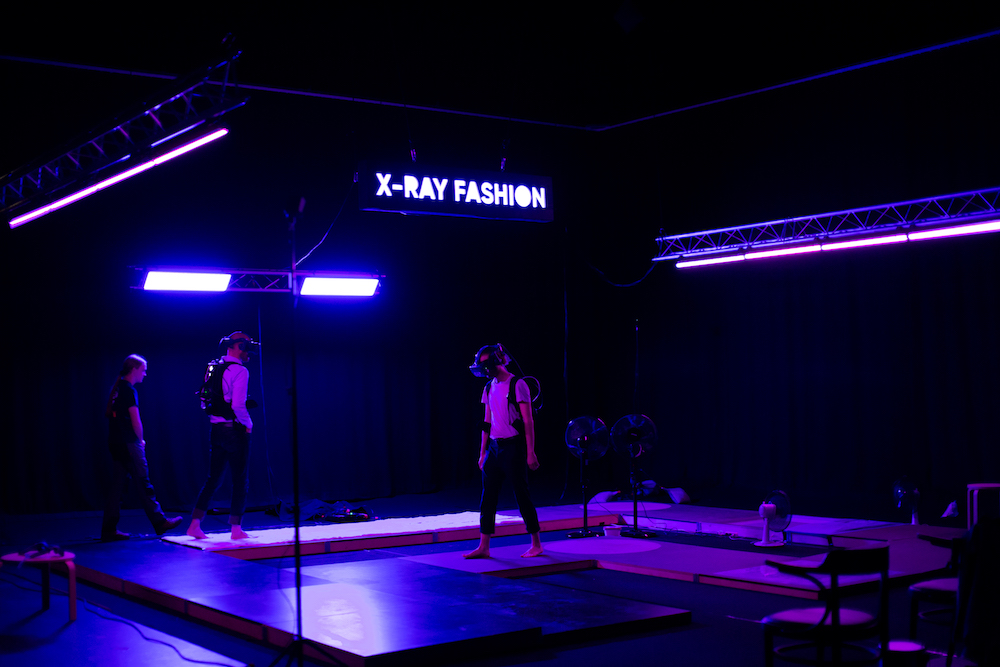
X-Ray Fashion is an award-winning VR documentary that tells the dark story of garment production in the fast-fashion industry. As an audience in X-Ray Fashion, you are invited on this eye-opening journey to see and feel different stages of the garment production that you usually never have access to: The glamorous catwalk shows in New York, the inside of a sweatshop in India and water supply polluted by fabric dye from the factories. In this presentation, hear Maria tell about the project and how it came to life. 

Maria Herholdt Engermann

With a bachelor degree in VIA Film & Transmedia, Aarhus, Denmark, Maria Herholdt Engermann has a deep craving hunger for new media storytelling – especially within transmedia and virtual reality (VR). For the last five years she has been specializing in how to create XR experiences that can attract international attention such as X-Ray Fashion and Separate Silences proven by having these exhbited all over the world at various A-ranked film festivals such as Cannes- and Venice film festival. Today she’s the founder of the XR company MANND that creates VR and AR solutions for both business and art, and together with co-founder Signe Ungermand where they are always seeking new and creative projects pushing the boundaries of VR and AR.

Redcycle (Edu Uribesalgo)

Launched in 2015 in collaboration with the Basque Government, the fishermen’s association of Gipuzkoa and the Italian company Aquafil, Redcycle is a pioneering process through which the discarded nets from the associations (in Gipuzkoa and Bizkaia) of Bermeo, Getaria and Hondarribia are collected. The nets are then sent to Slovenia, where Aquafil prepares, shreds and cleans them and sends them, in turn, to the ECONYL® regeneration plant. There, the waste is converted into ECONYL® thread, a result of mixing the recycled fishing nets with other recycled materials such as carpets. This thread is used to make the fabrics that are transformed into recycled, recyclable and environmentally friendly garments. Ternua has received 2 international awards in the most prestigious outdoor fairs in Germany. Today they have over 20 products made using discarded fishing nets in our Ternua collection

Edu Uribesalgo is the Ternua Group innovation and sustainability director.

Advanced clothing solutions (Anthony Burns)

The fashion industry is one of the most resource-intensive industries in the world. At ACS, our goal is to improve the sustainability of the fashion industry by delivering ecological, robust, low-cost, dependable, profitable services to our customers. In 2018, we realised that – in order to accomplish our goal – we had to become ‘Sustainability Champions’ in everything we do. We constantly endeavour to recycle, reuse, and reduce our waste and minimise our energy and water consumption right across the business. We are huge believers in the fact that all positive environmental changes we make contribute to us delivering ‘Fashion Without The Footprint’.

Anthony Burns is the COO of ACS, an internationally recognised business, which empowers fashion retailers and brands to strategically embed, and easily embrace, circular business models. In his role, he sets the strategic priorities of the business and leads the company in growing all areas, including marketing, technology, product and analytics. Anthony Burns’ mission is to improve the sustainability of the fashion industry, and be more socially accountable, while increasing ACS’s turnover exponentially within 5-years.

IT Fashion (Flora Miranda)

Flora Miranda is a future-forward couturier based in Antwerp, emphasising the importance of digital identities, intangible and yet seemingly predominant in our daily lives. Whether introduced as a method like 3D-scanning, 3D-printing, laser-cutting, machine learning or generative design, technology is an essential medium in the designer’s work. Coming from a family of artists and musicians, Flora’s mission is to bring art to fashion. Seeing computer programming as a creative tool, her vision is to transform into a creative software company. She sets the first step into this direction with “IT Pieces”: Garments that are generated based on personal data, as a proposition to a 100% automated pipeline from design to production. In the webinar, Flora will introduce the vision behind “IT Pieces” to use technology for a sustainable approach to fashion.

Flora Miranda is an Austrian fashion designer and visual artist, based in Vienna/Austria and Antwerp/Belgium. Throughout her work the main focus is on the human being, one’s body, senses and perception. Gradually the designer is taking away restrictions and practical considerations in fashion towards the real expression of the self.