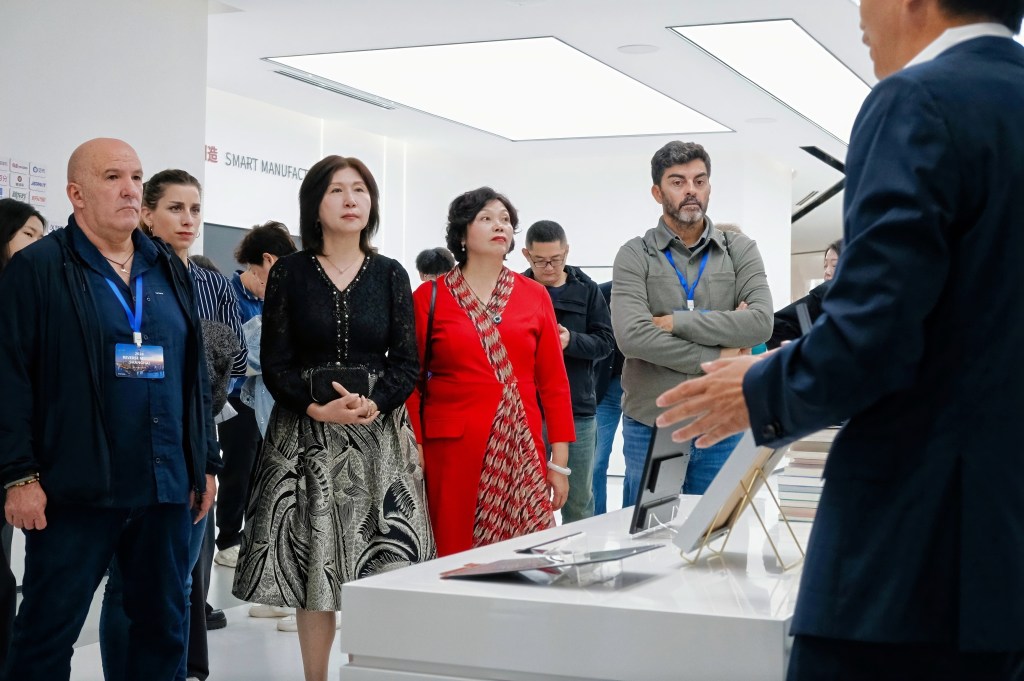
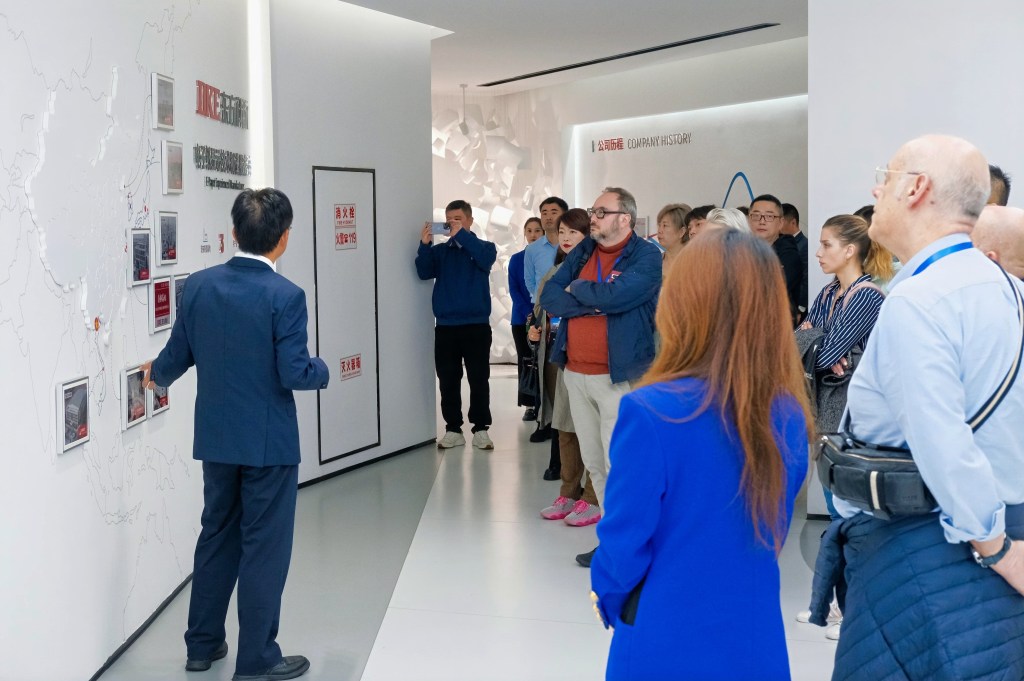
In November 2024, the Shanghai – Yangtze River Delta Region invited the other members for a three-day programme to explore how the creative industry can thrive and innovate on the one hand and help in preserving the traditions on the other.
Shanghai’s creative industry is poised for continued growth, driven by the city’s commitment to innovation, its rich cultural heritage, and its strategic position as a global economic center. As a vibrant and integral part of the city’s identity, driving economic growth and cultural exchange. Moreover, Shanghai’s creative industry is a dynamic and multifaceted sector that plays a crucial role in the city’s economy and cultural landscape. It encompasses a wide range of fields, including film, media, design, fashion, and technology.
The integration of diverse components, robust infrastructure, supportive environment, new technologies, the expansion of creative zones, and the fostering of international partnerships will further enhance Shanghai’s status as a leading creative hub.
A full programme was planned with a.o. a visit to the hub of game development studios and the cultural district in Nanxiang; the FICS Xinhua 365 Creative Park harboring several creative initiatives in the centre of Shanghai; and a visit to the largest producer of e-ink screens in the world.
One thing is clear: public and private investment go hand in hand to grow the creative economy in China!
The Metaverse – the fusion of digital and physical worlds through virtual and augmented realities – holds enormous market potential. It is transforming business models, opening new opportunities for creative applications, while also presenting major challenges for industry, research, and society. A key role in this transformation is played by the creative industries. As pioneers of innovation, they are experimenting with new digital and hybrid communication and entertainment formats and are developing immersive applications that drive change across multiple sectors. In this context, the games, XR, and VFX industries are particularly noteworthy, as they already offer many exciting practical examples and are therefore among the most relevant fields of technology.
WHO THIS IS FOR?
The virtual meetup is aimed at creative entrepreneurs, representatives of creative clusters, network and business support organizations, researchers, and policymakers—as well as anyone curious about how Baden-Württemberg is integrating the Metaverse into its digital strategy. Participants will also gain exclusive insights into pioneering projects and initiatives that are already exploring or operating within the Metaverse.
PROGRAMME
Master of ceremony: Dr. Petra Püchner
2:00 – 2:10 pm
Welcome by the Districts of Creativity Network and Baden-WürttembergThomas Schwara, Ministerium für Wirtschaft, Arbeit und Tourismus Baden-Württemberg
2:10 – 2:25 pm
Introducing: The CyberLÄND initiativeDr. Frank Dürr, Co-Founder and Director StrategyCo-Founder and Director Strategy, acameo
2:25 – 3:20 pm
Inspiring cases from the DC Network Members incl. Q&A Out of Words | Johan Oettinger, the founder of WIREDFLY & Esben Kjær Ravn from Kong Orange artANDneuro | Ana Moya – Project Manager / Industry and Mobility, technalia Station area digtal twin | Minna Säpyskä – Senior Specialist Smart Urban Security and Event Resilience, The Baltic Institute of Finland Glasses-Free 3D Technology | Dr. Matthias Hohenstein, Geschäftsführer 3D global
” Any sufficiently advanced technology is indistinguishable from magic.” Arthur C. Clarke
For the past few years, we’ve been hearing a lot about Artificial Intelligence (AI) and how it’s making big paces with new and exciting applications. But for most, AI still feels like a fuzzy idea that’s hard to wrap our heads around. It’s almost like a magical thing rather than just a new tool born from technology.
This has made AI one of those buzzwords that gets thrown around a lot, and frequently employed in a manner that is indiscriminate, erroneous, or lacking in completeness. The real deal is that AI is growing like crazy. But a lot of times regular folks—like everyday people, customers, and even workers—don’t even realize it’s there, quietly doing its thing.
This upcoming Meetup will showcase some of the practical applications of AI within the DC Network regions. We’ll talk about how entrepreneurs and companies are ingeniously incorporating AI across creative sectors.
The DC Network Meetups are about bringing together professionals from the different DC Network-regions to discuss specific topics related to cross-disciplinary creativity, innovation & entrepreneurship. The idea is to share good practices/inspiring examples/projects and stimulate knowledge exchange.
Who was this for?
Designers, Creative entrepreneurs, representatives of creative clusters, network and business support organisations, policy makers and anyone with an interest in the subject.
Program
2:00 pm
Welcome by Carles Gomara (Districts of Creativity Network)
2:10 pm
Four inspiring creative initiatives and business models on AI (15 min. each) – Nico Roig – CG Artist Metropolitana – Stephanie Preuss – Director Content Innovation Springer Nature – Jussi Lahtinen – Urban AI artist – Antonia Folguera – Curator Sónar +D
New challenges in deep fake commercials in the era of AI. As deepfake production techniques fastly evolve through the implementation of AI tools, production houses become more ambitious and ready to take up the challenges thrown by creatives, commonly aware of production/budget limits. Our expertise in traditional post production techniques (such as 3D, compositing, color grading) has turned into a privileged partner to the generative imaging power of AI, and has allowed us to reach farther limits. We will show some of our productions, great examples of this synergy.
As one of the largest scientific publishers, Springer Nature has been advancing discovery by providing the best possible service to the entire research community for over 180 years. We assist researchers in uncovering new ideas and ensuring that all the research we publish is significant, robust, and withstands objective scrutiny. Our aim is to reach all relevant audiences in the best possible format and ensure that it can be easily discovered, accessed, utilized, reused, and shared.Following a whirlwind of excitement in the field of generative artificial intelligence (AI), it is almost unquestionable that large language models (LLMs) have the potential to transform the way we conduct and communicate science. However, the risks and limitations of relying on these technologies are also becoming apparent.
Exploring technological innovation, including the use of AI, has always been at the core of our work at Springer Nature. We anticipate that in the very near future, humans will utilize LLMs as tools to draft various content types, such as news articles, social media content, or even more traditional formats like Research Highlights. We are actively exploring the opportunities these tools may offer but not at the expense of trust and rigor.The case presented is an example of how Springer Nature is embarking on the journey towards the responsible use of LLMs in scientific publishing by developing tools that enable Springer Nature’s internal editors and authors to harness generative AI for accelerating content creation, such as plain language summaries of research articles or social media posts, in a responsible manner.
Urban AI Art is part of the Urban AI project that combines art and science. The main location of the project is the University of Tampere and it is financed by the machine foundation. Visual artist Jussi Lahtinen is responsible for the Urban AI Art artwork and for the technical implementation programmer Henri Sarasvirta, from Moido Games.The Urban AI Art work of art enables development into an art project that is international and communal, as it enables the collaboration of, for example, 100 works of art and artists. It renews the traditional concept of art, how the artworks are displayed. In the past, art has been in galleries and museums, Urban AI Art enables the artwork to be presented on all digital screens globally and to be viewed on a mobile phone.
The latest advances in AI have basically entered our eyes, LLMs have revolutionized text and image, and audio and music seem to be trailing behind.
The truth is that music has been related to AI since the beginning. In this session we will retrace the path that AI and music have taken from 1957 until now and we will see some experiments that we have developed at the Sónar festival.
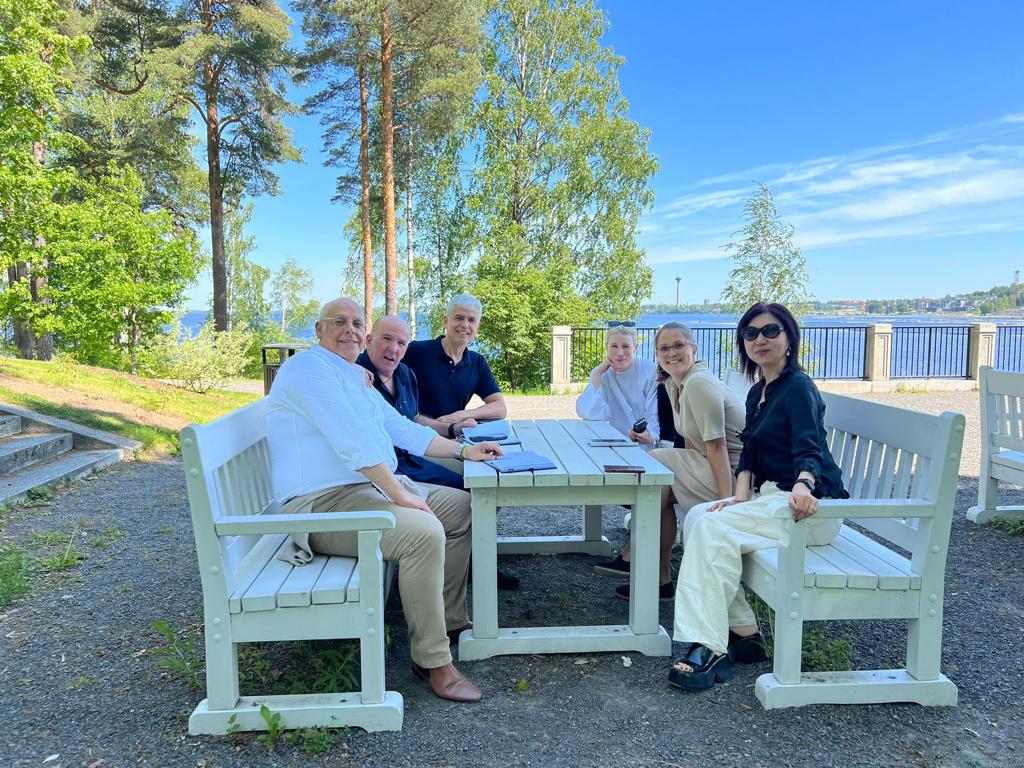
From June 13 till 15, 2023 the city of Tampere hosted the annual gathering of the DC Network during the 2023 Reverse Mission, bringing together cities and regions from Shanghai to Catalonia. The network had the opportunity to familiarize themselves with Tampere’s creative industries and its economic impact on the region. During the three-day visit, network members were given an exclusive glimpse into Tampere’s event industry and audiovisual sector.
This remarkable city by the lake, where nature is the so-called oxygen of its inhabitants, grew out to the second largest city of Finland, counting 200 lakes and ponds 3800 hectares of forest in the Tampere area. Thanks to its competitive development plan, Tampere is with its 250.000 citizens spearheading as the most recommended student city and the most attractive residential destination.
With a long history as a culture, event and film city, Tampere is also home to many creative people and is internationally known as the centre of large-scale (sports) events and culture.
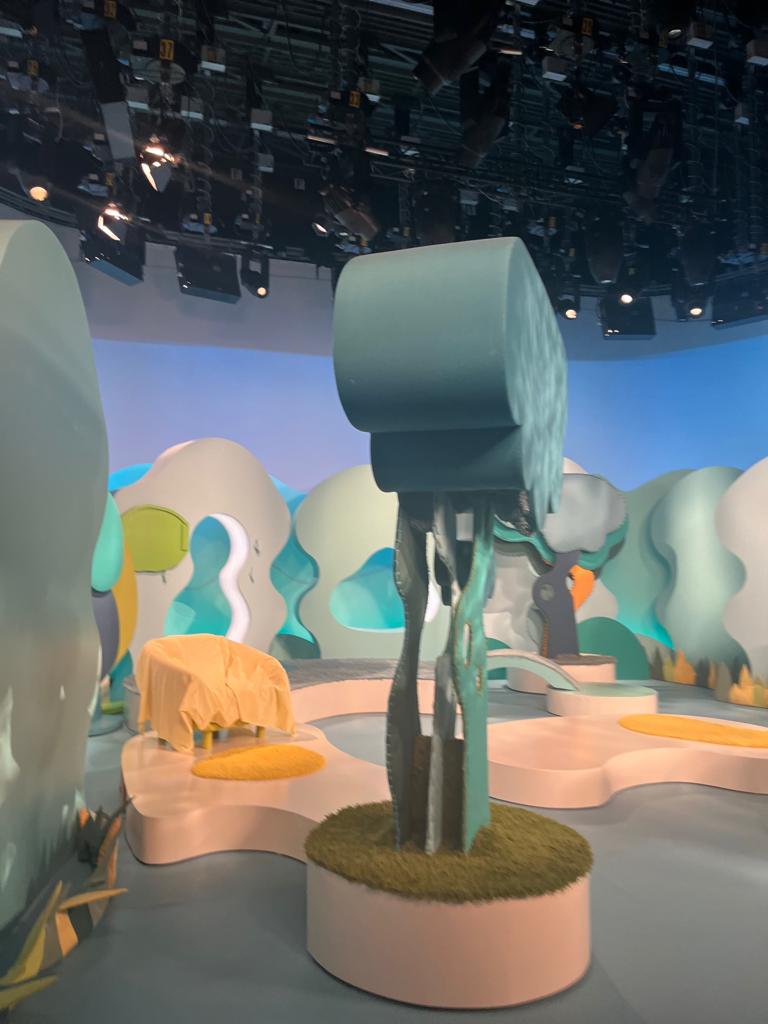
The first day of the Reverse Mission focused on the audiovisual assets of Tampere, starting with a tour at Mediapolis, located in the Tohloppi district to familiarize with the range of educational programs available, and the offerings of Yle, the Finnish Broadcasting Company. A visit to the Pikku Kakkonen aka Tiny 2 studios, for more than 40 years known as the magazine show for the little ones.
Fanny Heinonen, the Business Advisor of Film Tampere, introduced the network to Tampere’s internationally significant audiovisual cash rebate, which attracts film productions from distant locations as well. The regional cash rebate in the Tampere region is 10-15 percent, compared to Finland’s 25 percent of production costs, this makes Tampere an internationally attractive production destination. In addition to the cash rebate, the area offers both urban and lake scenery, countryside settings, studios, as well as the infrastructure and expertise required for executing productions at an international level. Beside, Ilkka Rahkonen, CEO of Ilkka’s Creative Studios (ICS)shared some interesting insights into business models for intellectual property rights.
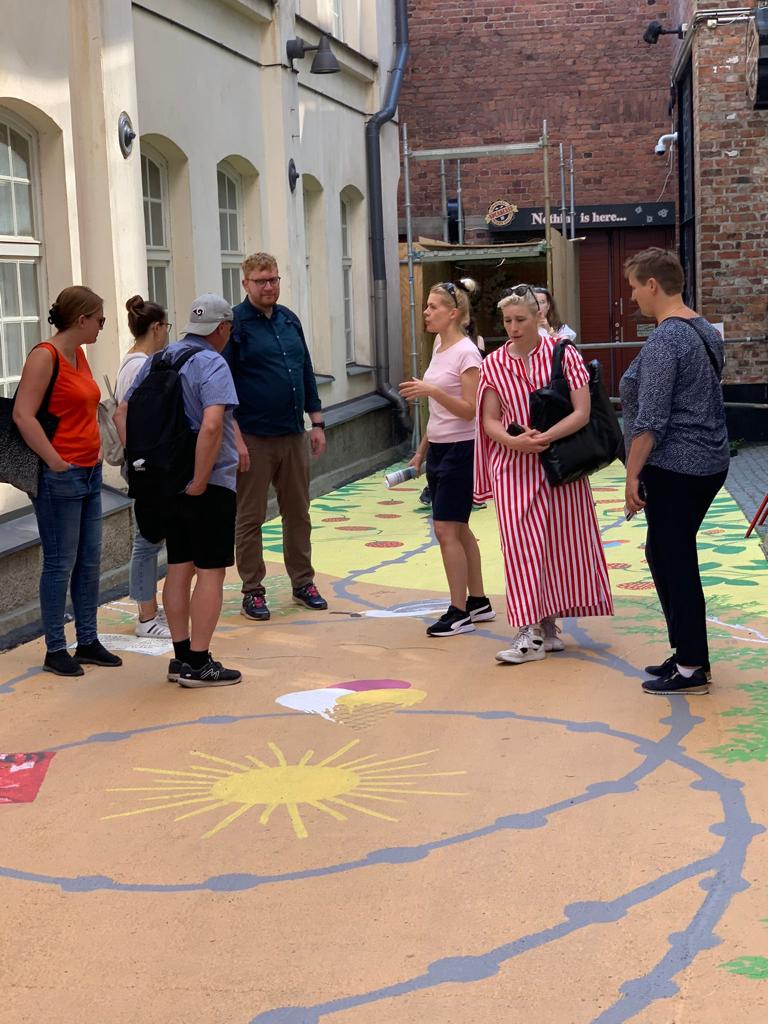
The visit to Tampere film studios was followed by a discovery tour at the extraordinary Hiedanrante site, the future hub of Western Tampere, and Lielahti Manor. The historical factory community in Tampere’s Hiedanranta is transforming into a modern and sustainable city district, home to 25.000 future residents with an ambitious focus on culture, events and innovation. The visit to the historical manor and the mill, surrounded by the park and a lake are nowadays the center point of multiple cultural events and venues and the colourful mills (graffiti) will be dedicated to creative spaces in the future.
Day 2 started with a deep-dive into the congress and large-scale event capacities of Tampere. One of the advantages of the city is the short distances between residential and venues spaces, which raises the attractiveness of the city in the organization and mobilization of citizens in the major international sports events Tampere is hosting every year. Perttu Pesä, the Event Director of the City of Tampere, engaged in discussions with the network about the significance of major events for the regional economy and the social and branding impacts on the city, giving some interesting insights in the financial model of cooperation of the Tampere Region For instance, the Ice Hockey World Championships brought over 60 million euros to the Tampere area, which accounts for eight percent of the annual turnover generated by events.
According to Kati Kuusisto, current CEO of Kuusisto & Sahlstedt Oy and former Advocacy Director of the Finnish event industry association, a shared vision is essential for the event industry. “The societal impact of the event industry is significant, but if each event sector conveys its message individually, the societal effect remains fragmented and limited”, Kuusisto states.
The visit to the 15.000 multifunctional Nokia Arena at the heart of Tampere, opened in December 2021, and the impressive Tampere Hall showed us the potential of the city, with a glimpse at the Tampere Vocal Music Festival.
Tampere also has a young artistic underground scene with multiple artists squatting in the Demolition Art House Pinni47, a five-story building where visual art, graffiti and video art have taken over the walls, stairs and spaces before the demolition of the building will start.
As the world capital of sauna, we closed day 2 with a must-experience in a Finnish smoke sauna where temperature usually goes over 100°C . Nice to know: Finland is counting 5.5 million inhabitants and has 2.5 million sauna’s.
On Day 3 we discovered the industrial history of Tampere, starting with a visit to the old Finlayson factory, better known as the old cotton factory turned into a hub for creatives. The Factory hosts the Himmelblau studio and gallery, the leading professional printmaking studio and gallery of Finland, as well as the Finlayson Art Area, a temporary art event showcasing a versatile selection of 14 Finnish artists (June – August 2023).
The industrial area offers more creativity, in the name of the Vapriikki Museum Centre, home to five different museums including The Finnish Hockey Hall of Fame and The Finnish Museum of Games.
Creativity strengthens by collaboration and proud; this leading example on how decision-makers, entrepreneurs, and citizens come together to build a city supporting events gave us much inspiration to strengthen DC Network local cities and regions.
Are you interested in joining the next Reverse Mission 2024 to one of our member regions? Contact us for more info!
What a relief! After two years of COVID, the Creativity World Forum – our flagship event for creativity, innovation & entrepreneurship – had another great edition in 2022. This edition of the event was hosted by the German region of Baden-Württemberg, and took place online from 18 – 20 July 2022 and as a hybrid event in Stuttgart (Germany) on 21 July 2022.
During these 4 days, we saw a series of inspiring talks, surprising tech/startup demonstrations and promising pitches. Those who made it to Stuttgart discovered a lovely venue with great hospitality. And perhaps the most important: we had lots of opportunities for formal and informal knowledge exchange between people and regions from all over the world.
In this video, you can relive all the plenary talks on stage in Stuttgart on the 21st of July:
The Creativity World Forum is the annual gathering of the international Districts of Creativity Network. The aim of this network is to stimulate creativity in society through intercultural exchange and thereby promote innovation and prosperity. Creativity makes people, companies and regions unique.
More info on this edition of the Creativity World Forum can be found on cwf2022.de.






 .
. 







 districtsofcreativity.org